
Modern NAV Infrastructure: Cloud Platforms, APIs, and Connecting Your Tech Stack
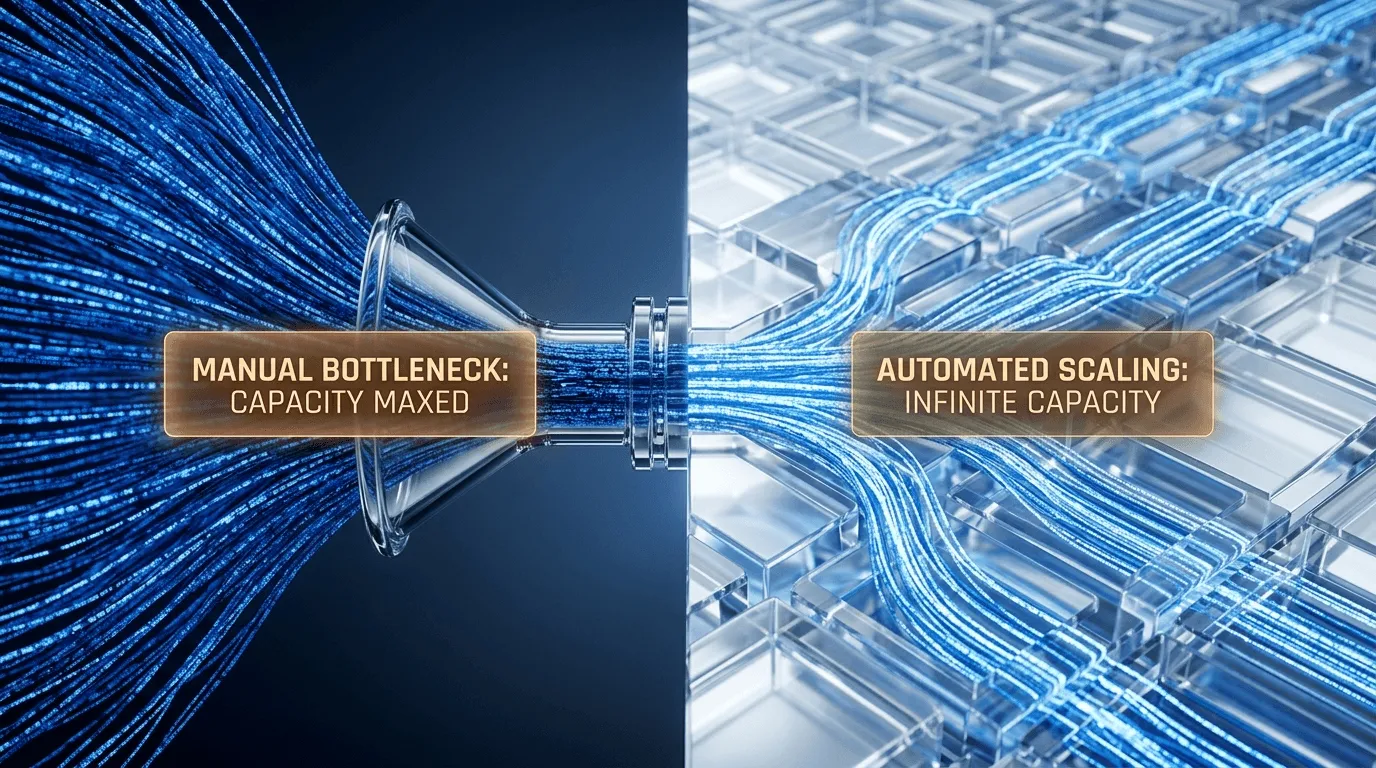
Modern NAV infrastructure is cloud-native, API-connected, and designed for multi-fund, multi-user operations. It replaces the fragile spreadsheet-and-desktop paradigm with continuous deployment, role-based access, and built-in audit trails, enabling fund managers to scale without proportionally scaling their operations team.
The infrastructure behind NAV calculation has undergone three distinct generational shifts: from spreadsheets to desktop applications to cloud-native platforms. Each transition was driven by the same forces, growing fund complexity, stricter regulatory requirements, and the operational limits of the preceding technology. Understanding this trajectory is essential for managers evaluating their next infrastructure decision.
NAV Infrastructure Comparison
| Capability | Spreadsheets | Desktop Software | Cloud-Native Platform | API-First Platform |
|---|---|---|---|---|
| Multi-user collaboration | None (file locking) | Limited (LAN) | Full (role-based, concurrent) | Full + programmatic access |
| Audit trail | None native | Basic change logs | Complete, timestamped | Complete + API-queryable |
| Integration with data sources | Manual copy-paste | File imports | API + file ingestion | Native API connectors |
| Update cycle | Manual formula maintenance | Periodic installer patches | Continuous deployment | Continuous + versioned API |
| Disaster recovery | Local backups only | Server-dependent | Geo-distributed replication | Geo-distributed + failover |
| Scalability (funds/series) | Breaks at scale | Moderate | High | High + automation-ready |
How Did NAV Infrastructure Evolve from Spreadsheets to Cloud?
Every generation of NAV tooling solved a real problem, and eventually created new ones. Spreadsheets gave fund managers complete flexibility and zero licensing costs. Desktop software introduced multi-user access and basic workflow controls. Cloud platforms now deliver continuous updates, remote access, and integration capabilities that neither predecessor could match.
The spreadsheet era worked when funds had a single strategy, a handful of investors, and monthly reporting. As asset classes diversified and investor expectations increased, the limitations of manual workflows became structural liabilities, formula decay, key-person risk, and the absence of audit trails.
Desktop applications addressed some of these gaps by enforcing data integrity rules and separating logic from presentation. But they introduced their own friction: local installations required IT support, updates were infrequent and disruptive, and collaboration meant passing files between machines.
According to Calastone’s Fund Processing Report, over 70% of fund administrators surveyed are actively migrating to cloud-based infrastructure, citing audit-trail automation and API connectivity as the primary drivers. Cloud-native platforms resolve these issues by design. The software runs in a managed environment, updates are continuous and transparent, and every user accesses the same version from any location.
What Are the Benefits of Cloud-Based NAV Production?
Cloud infrastructure offers operational advantages that go well beyond convenience. For fund managers evaluating a platform migration, the most consequential benefits are structural rather than cosmetic.
- Multi-user access with role-based permissions. Multiple team members can work on the same fund simultaneously, with granular controls governing who can view, edit, or approve valuations.
- Version control and audit history. Every change is logged with timestamps and user attribution. There is no ambiguity about which version of a calculation was used for a given NAV date, a critical requirement during audits.
- No local installation or maintenance. The platform is accessible through a browser. There are no software updates to schedule, no compatibility issues across operating systems, and no hardware dependencies.
- Automatic updates and feature releases. New regulatory requirements, calculation methods, or reporting formats are deployed centrally. Every user benefits immediately without manual intervention.
- Disaster recovery and business continuity. Data is replicated across geographically distributed infrastructure. A hardware failure, office disruption, or regional outage does not compromise the fund’s operational capability.
- Access from anywhere. Whether the team is in Zurich, Singapore, or working remotely, the NAV process runs without location-dependent constraints.
For growing managers, these benefits compound: each new fund or certificate added to a cloud platform inherits the same infrastructure without incremental setup cost.
What Role Do APIs Play in Modern NAV Workflows?
Application Programming Interfaces (APIs) are the connective tissue of a modern NAV operation. They allow systems to exchange data programmatically, without manual exports, file transfers, or copy-paste operations.
In a well-connected NAV workflow, APIs link the calculation platform to:
- Market data providers, automated price feeds that eliminate manual sourcing.
- Custodians and prime brokers, position and cash balance reconciliation without spreadsheet intermediaries.
- Portfolio management systems, trade data flows directly into the NAV engine without re-keying.
- Accounting and ERP systems, journal entries, fee postings, and GL updates propagate automatically.
- Investor portals, NAV reports and capital account statements publish directly to investor-facing dashboards.
The result is a reduction in both latency and error surface. Data moves from source to calculation to report without human transcription at each boundary.
How Should You Choose an Integration Pattern?
Not all integrations are created equal. The pattern you choose affects reliability, timeliness, and operational complexity.
- Push vs. pull. In a push model, the source system sends data when it is ready (e.g., a custodian transmitting end-of-day positions). In a pull model, the NAV platform requests data on a schedule. Push reduces latency; pull gives the consuming system more control over timing.
- Batch vs. real-time. Batch processing collects data over a period and processes it at once, suitable for end-of-day NAV cycles. Real-time processing handles events as they occur, relevant for intraday indicative NAVs or live portfolio monitoring.
- File-based vs. API-based. Legacy integrations often rely on CSV or XML file drops to shared directories. API-based integrations are more robust, offer better error handling, and eliminate the “stale file” problem where an outdated export is mistakenly consumed.
Most NAV platforms today support a hybrid approach: API-first where counterparties support it, with file-based ingestion as a fallback for custodians or administrators still operating on legacy infrastructure.
What Should You Evaluate in a NAV Platform?
Selecting a NAV platform is an infrastructure decision with a multi-year horizon. The evaluation criteria should go beyond feature checklists and focus on architectural fit.
- Calculation engine flexibility. Can the platform handle your fee structures, waterfall models, and equalization logic without custom development? Does it support multiple fund types, AIFs, AMCs, SPVs, within a single environment?
- Fee structure support. Performance fees with high-water marks, hurdle rates, crystallization frequencies, and multi-series equalization are non-negotiable for alternative fund managers. The platform should handle these natively, not through workarounds.
- Audit trail depth. Every input, calculation, and output should be logged and queryable. The audit trail must support both internal review and external audit without requiring manual reconstruction.
- Reporting capabilities. Can the system produce investor-ready reports, regulatory filings, and internal dashboards from the same validated dataset? Is the report format customizable without developer involvement?
- API coverage. How comprehensive is the platform’s API surface? Can you connect to your existing data providers, custodians, and downstream systems without bespoke development?
- Multi-entity support. Managers with multiple funds, sub-funds, or share classes need a platform that handles entity hierarchies cleanly, not one that requires a separate instance for each vehicle.
- Security and access controls. SOC 2 compliance, encryption at rest and in transit, role-based access, and IP whitelisting are baseline requirements for any system handling investor data.
Build vs. Buy: When Custom Development Makes Sense
The build-vs-buy question is perennial, and the answer depends on where your fund sits on the complexity spectrum.
Building a custom NAV system makes sense when a fund has genuinely unique structures that no platform on the market supports, bespoke waterfall calculations, highly non-standard asset classes, or regulatory regimes with no existing compliance templates. In these cases, the cost of customization may exceed the cost of development.
For the vast majority of alternative fund managers, however, purpose-built platforms offer a faster, cheaper, and more maintainable path. A commercial NAV platform embeds years of domain expertise, fee calculation logic, regulatory reporting templates, and integration patterns, that would take an internal team months or years to replicate.
The hidden cost of building is maintenance. A custom system requires ongoing development as regulations change, counterparties update their interfaces, and the fund’s own structures evolve. A managed platform absorbs this burden as part of its service.
The pragmatic approach is to buy the platform and build the integrations. Use a purpose-built NAV engine for the core calculation and reporting, and invest development effort in connecting it to your specific data sources and downstream systems.
Looking for NAV infrastructure that scales with your fund? NAVquant is the modern, cloud-based NAV platform built for alternative investment managers, automated calculations, API connectivity, and institutional-grade reporting.